Steps you can take to combat Gender Inequality

Learn more about the issue

              The degrees of gender inequality vary between countries. It is important educate yourself about life outside of the country you live in. World Economic Forum has an interactive website that measures gender parity through different areas. It is surprising that there is no nation in the world that has a gender parity score of 100%. Learning more about the issue can help you to get more perspective on an issue which is still prominent in several parts of the world

Donate to Save the Children.

         You understand the value and importance of an education. You have the ability to help those that don’t have the same resources as you. One way would be to donate to save the children. Save the children among many things works toward educating more girls. Just in 2018 they directly reached 8 million children through global education programs.

Advocate for Female Empowerment

              Gender inequality stems from outdated gender norms and specific gender roles. By taking measures that help women get their voice heard and ensure that they have equal opportunities as men will help reduce gender inequality. This can be taking small steps such as ensuring that the women in the teams you work with have the time to express their ideas and their opinions are being considered.
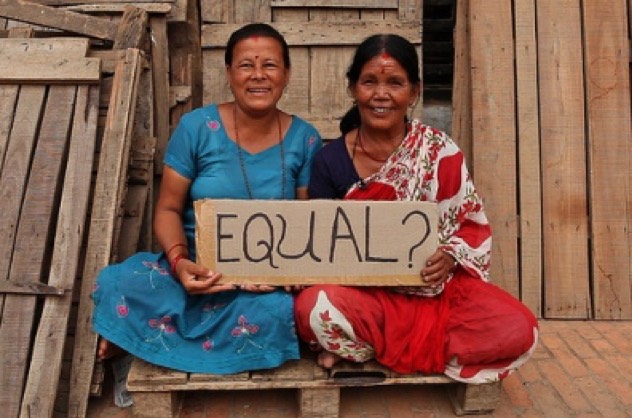
My Experience with Gender Inequality

Growing up, my parents had full time jobs which required a lot of travel. The nature of their jobs meant that we would often have to move around. One of the countries I lived in was India. During our time there, they would often have to travel within and outside the country for days at a time. Since my brother and I were quite young my parents had to hire a baby sitter to watch us whenever they traveled. As a result, my parents had to get a baby sitter sometimes.

One day, my baby sitter brought along her 16 year old daughter, who played with my brother and me and tolerated all the questions we asked her. We were really curious about her life and hobbies. We were curious about every aspect of her life. we asked her what her favorite color was? what her favorite ice cream flavor was? when her birthday was?

After a series of questions, we found out that she had stopped going to school. she had to sacrifice her education to help her mom with housework so that her mom could go out and work. However, her two brothers continued going to school. I found this idea pretty unusual. How can one just stop going to school? My parents wouldn’t even let me miss a single day of school. Looking back, I was just simply unaware of the experiences of others.

Gender Inequality in Third-World Countries

Gender Inequality in developed and developing countries can look drastically different. Gender inequality in developing countries could be seen through the prioritization of a boy’s education over a girl’s, violence against women and lack of healthcare for women.

Girls are more likely to be permanently excluded from receiving an education. According to UNESCO, 15 million girls of primary school age will never enter a classroom compared to 10 million boys.

Women are also more likely to experience violence. According to the world health organization (WHO), 1 in 3 women have experienced some sort of physical and/or sexual violence in their lifetime. However this statistic is worse for developing countries.

Since women have a harder time finding a voice in several developing countries they face the problem of not getting their health care needs met. The lack of female healthcare needs being addressed can explain the high maternal mortality rates in Nepal, Peru’s susceptibility to cervical cancer, and lack of accessible sanitary pads in Ghana.

It is hard for any country to develop economically, politically, or socially if half of their population is marginalized and not able to perform at their full potential.

The benefits of gender equality go beyond solely giving women the treatment they deserve. Gender equality can stimulate economic growth and raise incomes, According to UN Women, in Organization for Economic Co-operation and Development (OCED) member countries half of the economic growth is attributed to girls having better access to education. Women across the world face several barriers in terms of their professional career. According to the World Bank, 2.7 million women are prevented from working in certain jobs and in 18 countries men can legally forbid their wives from working. This translates to $160 trillion in lost income potential.

Gender equality could also benefit those in developed countries. For example, economic growth of other countries will lead to greater demand for American products which would lead to higher incomes for Americans

Tales of a Curious mind

HEALTH—LIFESTYLE—BOOK REVIEWS

Discover WordPress

A daily selection of the best content published on WordPress, collected for you by humans who love to read.

Longreads

Longreads : The best longform stories on the web

WordPress.com Blog

News, Tips & Website Tutorials

Design a site like this with WordPress.com
Get started